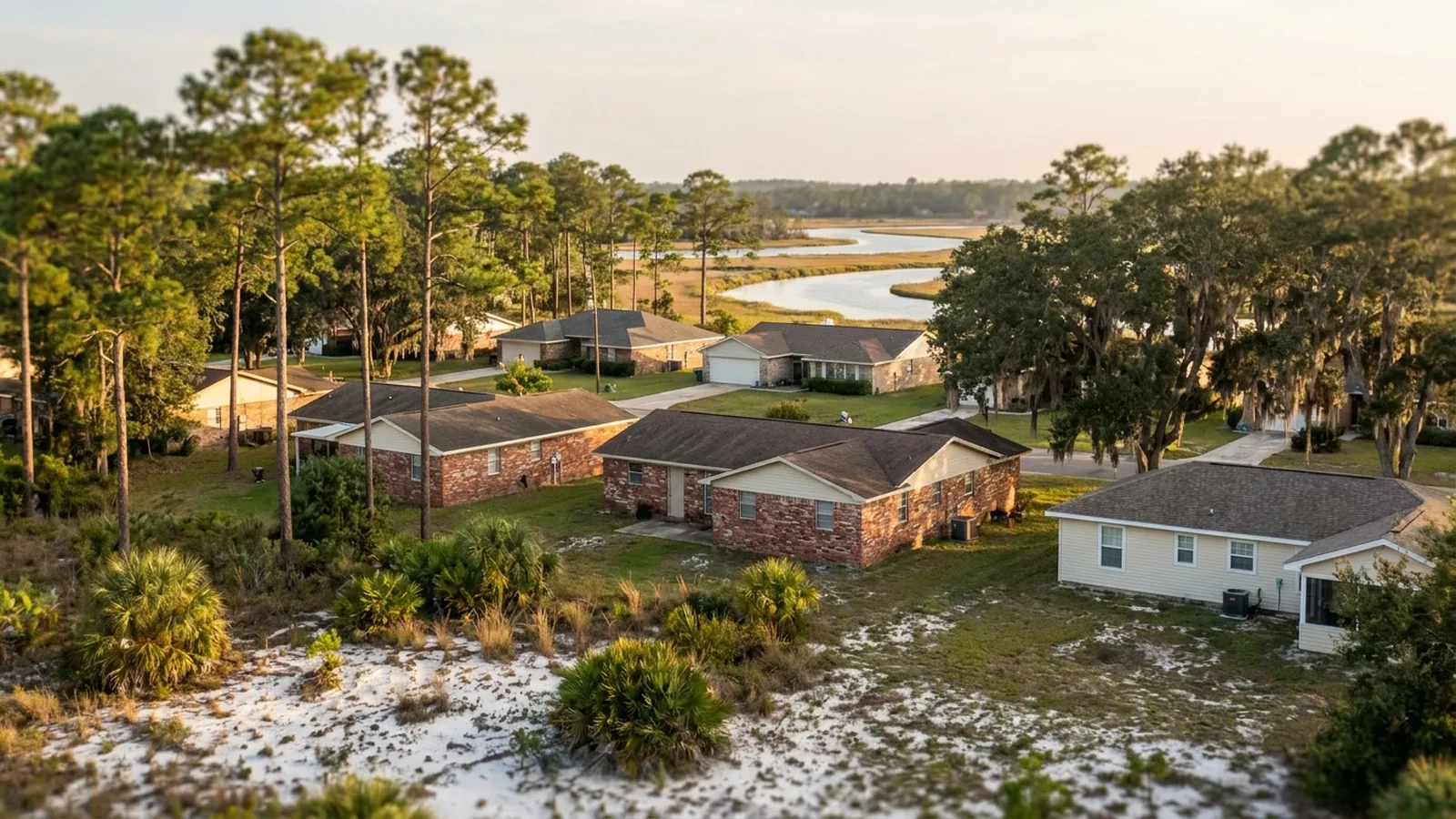
Helical piers in Panama City run $1,200–$3,000 each, and depth sets the price. Bay County’s organic layers run from a few feet to 60 inches and more, so the distance to competent sand varies across a single lot. Ask whether the first survey is charged.
Why depth rather than count drives the number, how torque verifies bearing, and when lifting is the wrong goal.
The number every quote leads with, and the one that matters
Pier count is easy to quote and easy to compare, which is why it is what companies put in front of you. It is also the half of the calculation that varies least. Two honest quotes on the same house usually agree roughly on how many piers are needed and disagree completely on how deep they go.
On this ground that second variable is not a detail. Where a compressible layer is three feet thick, a pier passes through it quickly. Where the survey maps 60 inches of organic material over sand and the lot slopes toward a bayou, the same pier may travel several times as far — and it is billed accordingly.
So a quote worth comparing states an assumed depth and a per-foot rate beyond it. A quote that states only a count and a total has hidden its largest assumption.
Why torque is the useful part
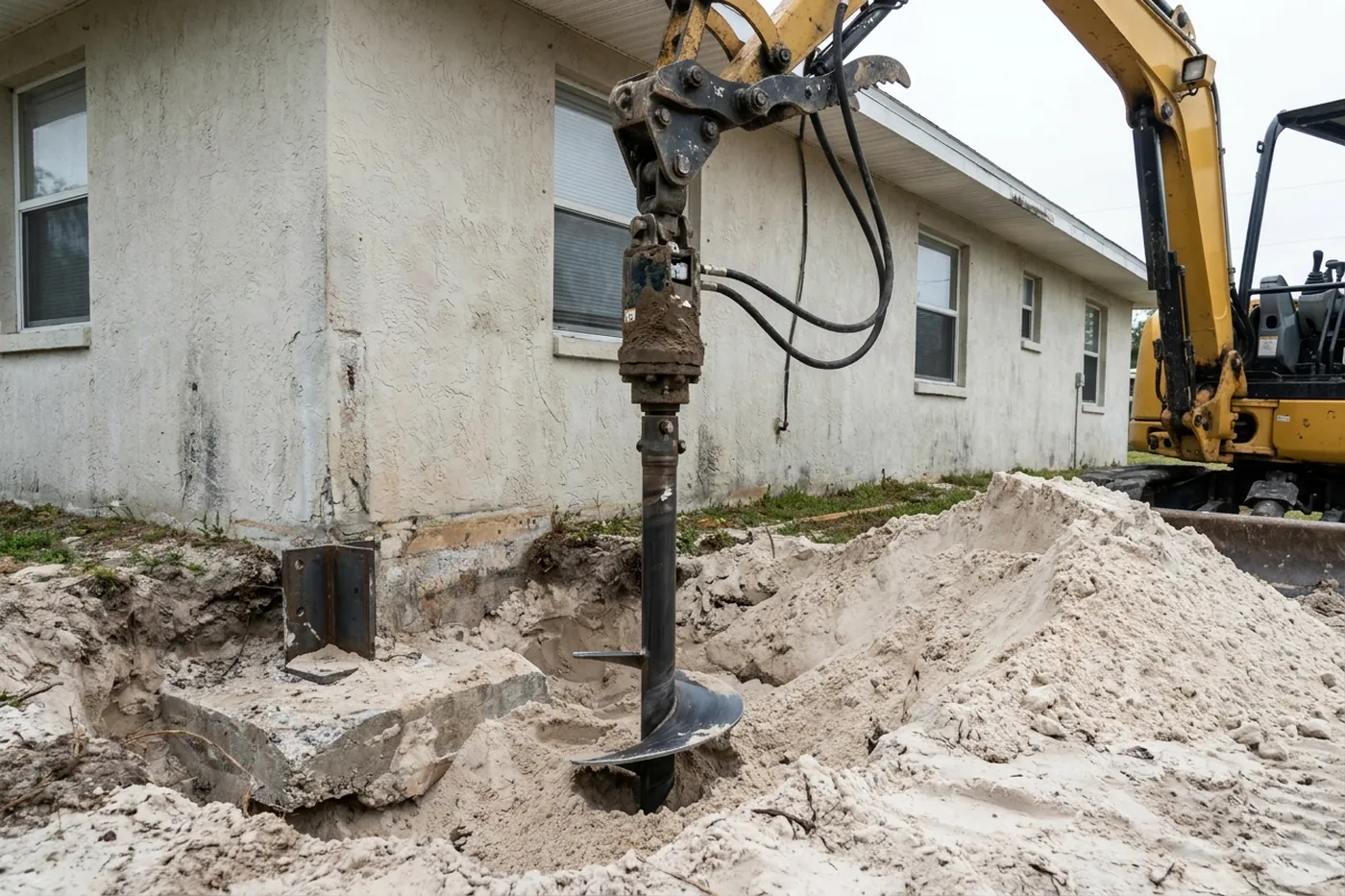
A helical pier is screwed into the ground rather than driven, and the resistance it generates as it turns relates to the bearing capacity of what it is turning through. That gives an installer a live reading of when the pier has found material that will carry load.
On uniform ground this matters little. Here, where one corner of a lot may reach firm sand at eight feet and another at twenty, it means each pier is taken to what it actually finds instead of to a depth somebody assumed for the whole house.
What a pier schedule should record
- Depth reached for each pier, individually, not an average
- Installation torque at termination, which is the evidence it reached bearing
- Location on a plan, so the work can be found again in ten years
- Lift achieved, if lift was part of the scope, against the target agreed beforehand
- The rate charged for footage beyond the assumed depth
Ask for that schedule to be left with you. It is the document that makes a warranty meaningful, and it is worth asking any contractor whether you will receive one before you sign.
Stabilise, or lift?
| Situation | Sensible goal |
|---|---|
| Recent, ongoing movement on a newer house | Stop it, then recover elevation where it is safe to |
| Old settlement, long finished, house adjusted | Often leave it — or relevel cosmetically only |
| Brick, tile and plaster throughout | Lift cautiously and expect finishes to move |
| One corner dropped, rest of house sound | Support and partial recovery, defined in advance |
Lifting a house is not automatically a benefit. A structure that has spent fifteen years finding a position has closed and settled around it, and jacking it back can crack finishes that were doing no harm. The honest form is a stated lift target you agree to, not a promise that everything returns to where it started.
Helical piers, answered plainly
What do helical piers cost in Panama City?
Each one lands between $1,200 and $3,000, and almost the whole spread is depth. A pier that reaches competent sand at 9 feet is at the bottom of that range; one that has to travel 30 feet through organic material to find the same sand is at the top.
How many will I need?
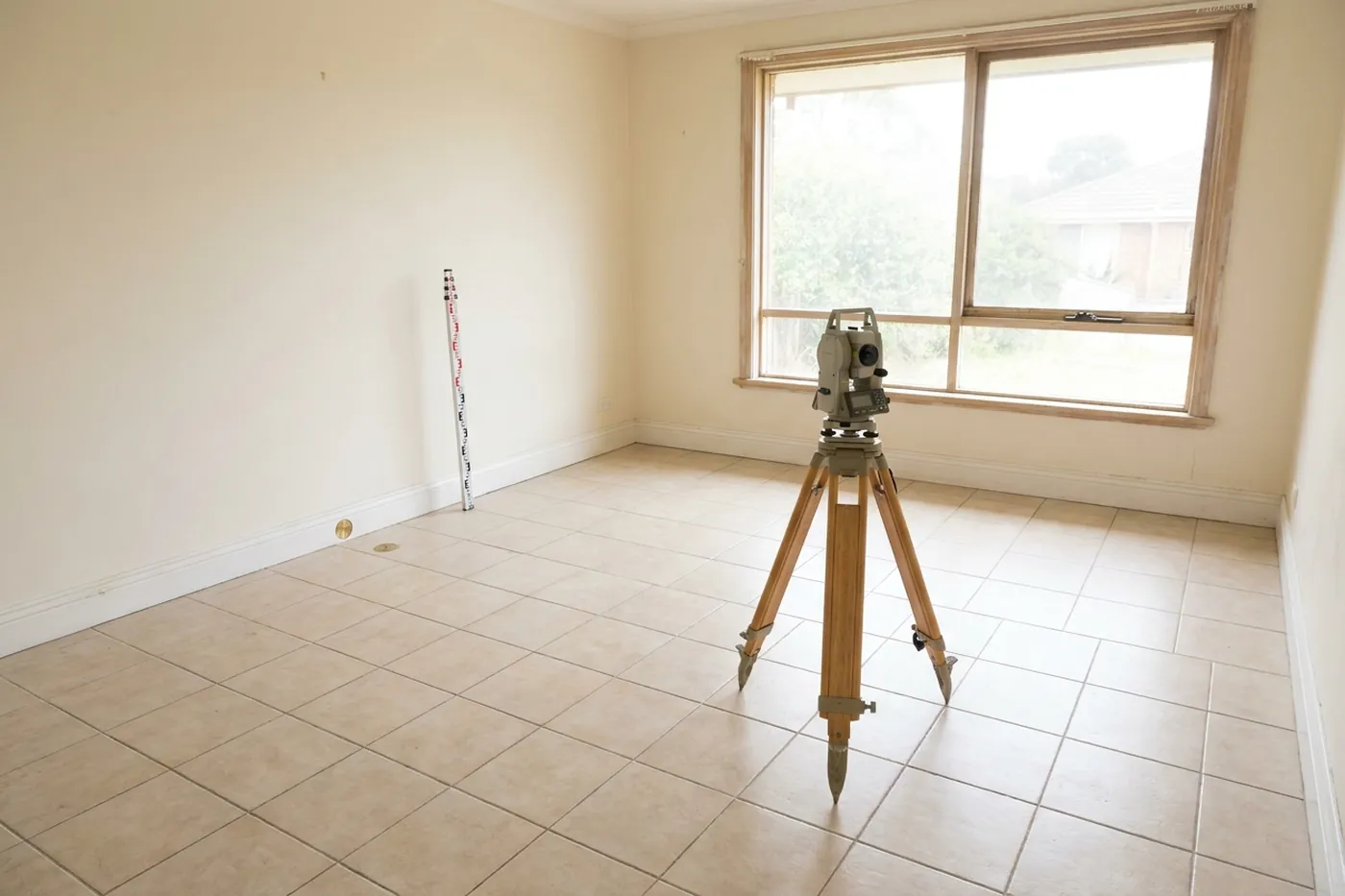
That comes from where the load path has failed rather than from the size of the house. A single settled corner may need four. A whole elevation that has dropped may need a dozen. Anybody quoting a count before measuring the floor is guessing at your expense.
Why helical rather than push piers?
Because they can be verified as they go in. A helical pier is turned into the ground and the torque it takes correlates with the bearing it has found, so there is a reading at the moment of installation. On ground where the depth to firm material varies across one lot, that matters.
Will the house be lifted back to level?
Sometimes, and sometimes stabilising it where it sits is the better outcome. Lifting a structure that has adjusted to its position over fifteen years can open more than it closes. Ask for the intended lift as a number before work starts, rather than a promise to put everything back.
Can they be installed under an existing slab house?
They can be installed under an existing slab house. Piers go in at the perimeter where the load comes down, with brackets transferring load from the footing to the pier. Interior support is a different and larger conversation, and it is worth being clear which one your scope is describing.
How long does it take?
Reckon on two to five days at the property once the layout is settled, and you stay in the house while it happens. Depth drives this too - a pier with a long way to travel takes longer to place than a shallow one.
Book a Panama City elevation survey
Tell us roughly when the house was built and whether the lot was raised or filled before it went up — even “I think they trucked dirt in” is worth knowing. On this ground the age of the house and the history of the pad narrow the answer faster than any description of a crack. A local specialist who serves Panama City will call you back.