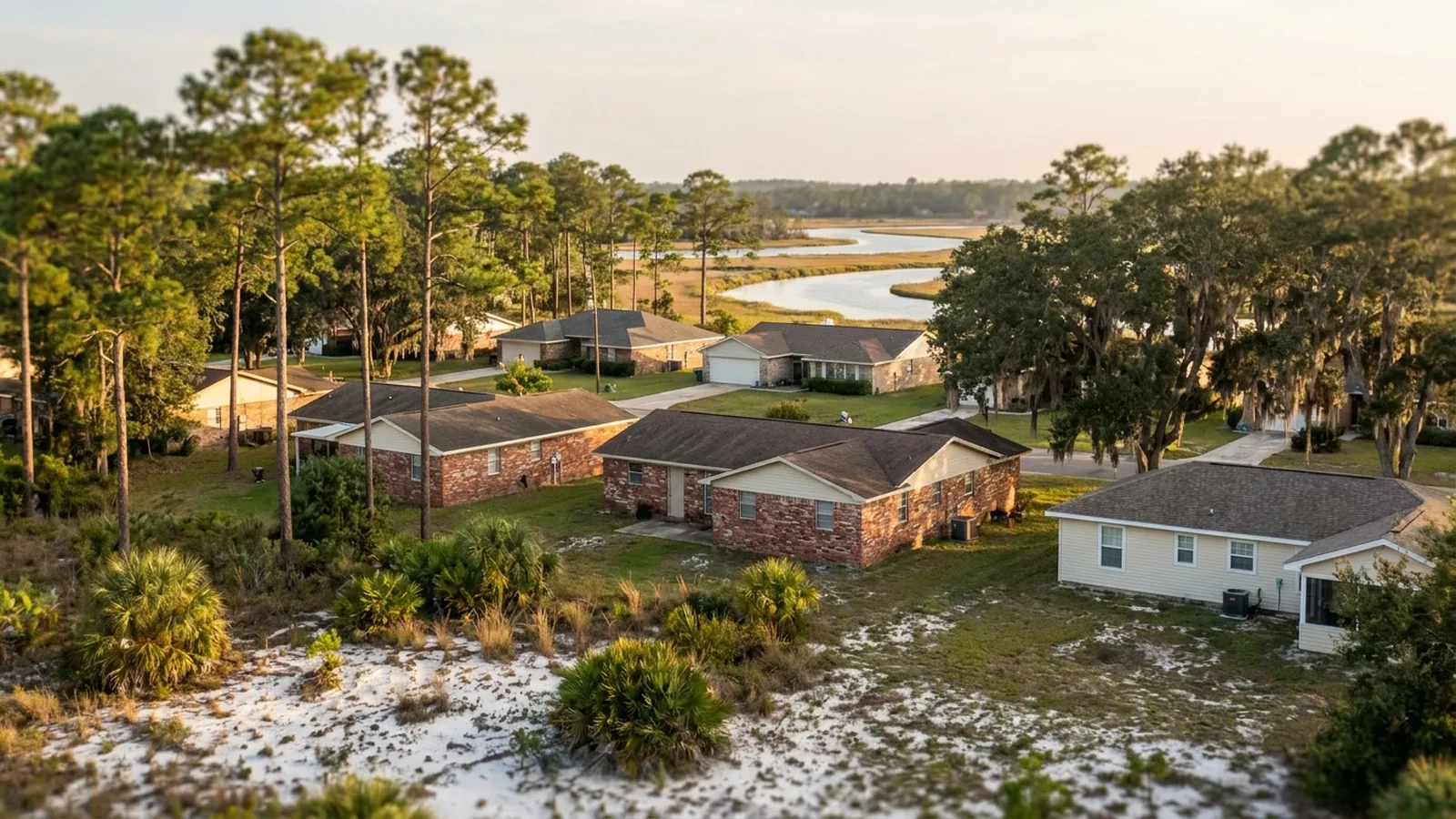
Foundation repair in Panama City costs $4,000–$15,000 for a complete job, with piers at $1,200–$3,000 each. Depth to competent sand drives the figure, and Bay County’s organic layers run to 60 inches. Ask whether the first survey is charged.
What each ground type costs to work on, why depth beats pier count, and the jobs where the honest number is zero.
Priced by what is underneath
Every quote you receive will be organised around your house. The variable that actually decides what you pay is the ground it stands on, and the USDA soil survey has already described most of it.
| What the probe finds | What the work looks like | Typical cost |
|---|---|---|
| Ridge sand near the surface (Foxworth type) | Short piers, or frequently no repair at all | $0–$6,000 |
| Shallow made ground over sand | Piers through the fill to native material | $4,000–$9,000 |
| Deep fill of unknown quality | Longer piers, and a per-foot rate that matters | $6,000–$12,000 |
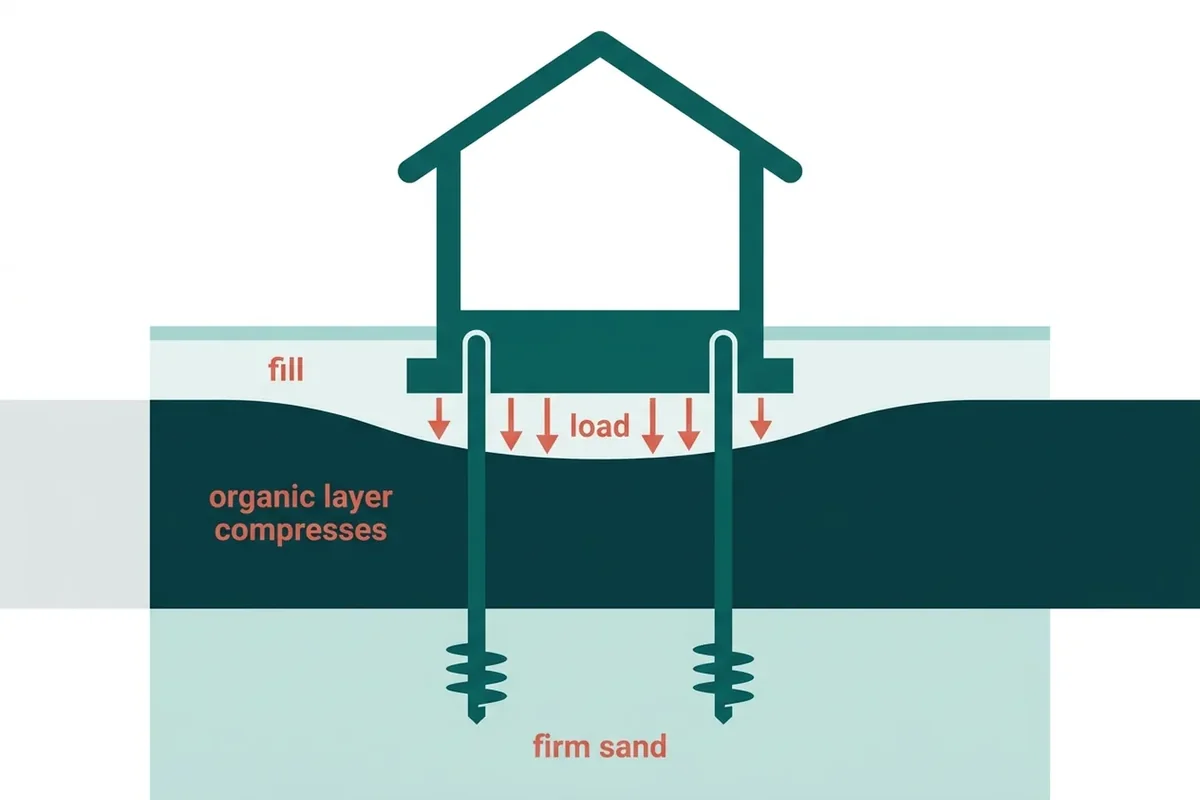
| Organic layer to 32 inches (Pamlico type) | Piers carried past the compressible material | $8,000–$14,000 |
| Organic layer to 60 inches (Dorovan type) | The same, further, and the price reflects it | Toward $15,000 |
Those bands are not a quotation and your lot may not match its mapped series — soil maps describe areas, not parcels. They are here so that a number arriving on your kitchen table has something to be compared against.
Every line, priced
| Work | Range | What drives it |
|---|---|---|
| First elevation survey | Often free; ask | Ask for the written findings to keep |
| Monitoring, 12 months | Ask the specialist | It exists to stop you buying what you do not need |
| Probing for fill depth | $300–$900 | How many locations, and how deep the made ground goes |
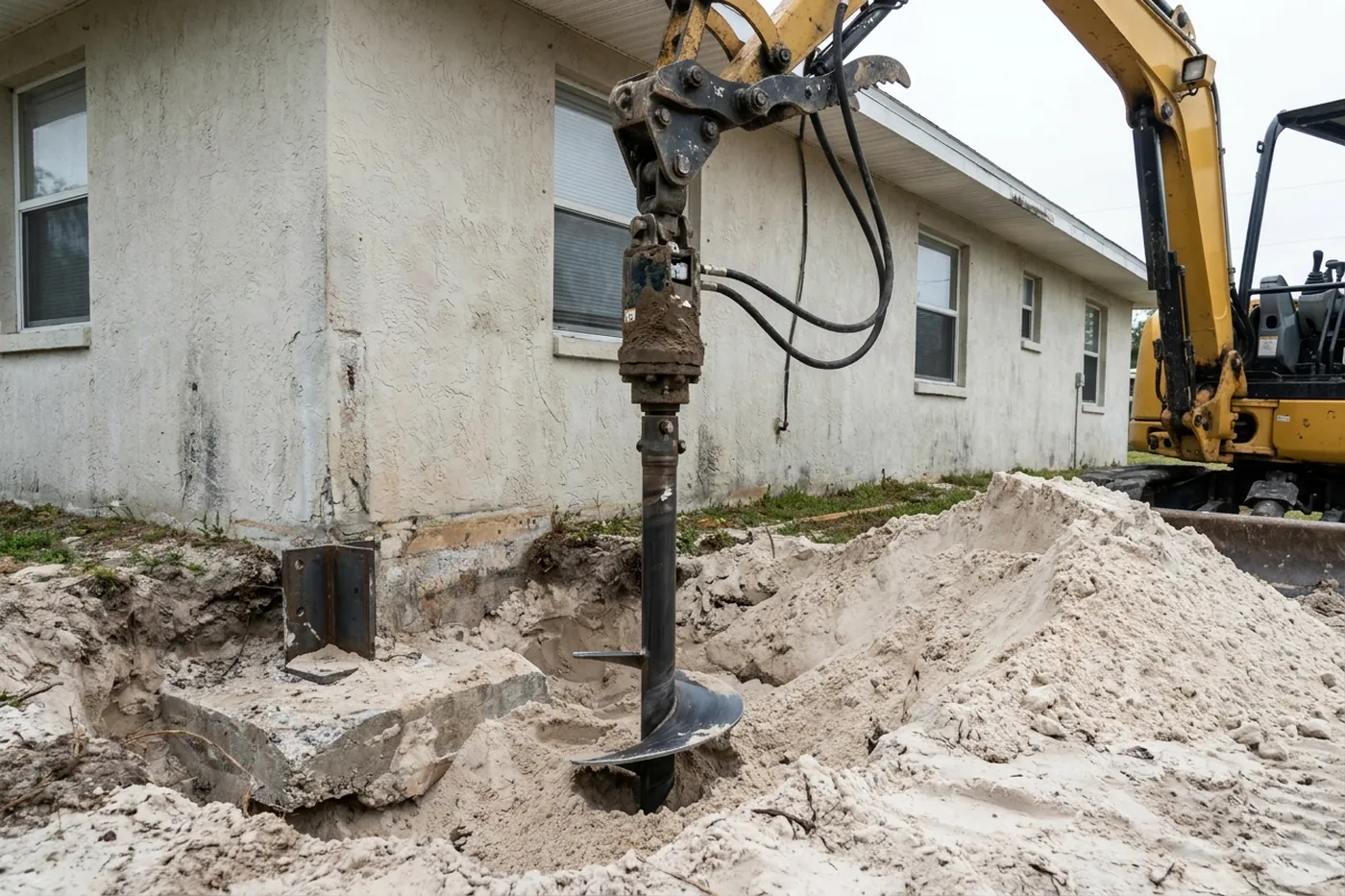
| Helical piers | $1,200–$3,000 each | Depth to competent bearing, overwhelmingly |
| Complete settlement repair | $4,000–$15,000 | Pier count multiplied by that depth |
| House releveling | $3,000–$12,000 | How much elevation is recovered, and what the finishes are |
| Cosmetic crack repair | $400–$1,500 | Last in the sequence, after anything structural |
Why depth beats pier count
Two honest quotes on the same Panama City house usually agree within a pier or two on how many are needed. They can still differ by thousands, and the reason is almost always an unstated depth assumption.
So the question that makes quotes comparable is short: what depth did you assume, and what do you charge per foot beyond it? A bidder who can answer that immediately has thought about your lot. One who cannot has priced a house rather than a site.
The jobs that cost nothing
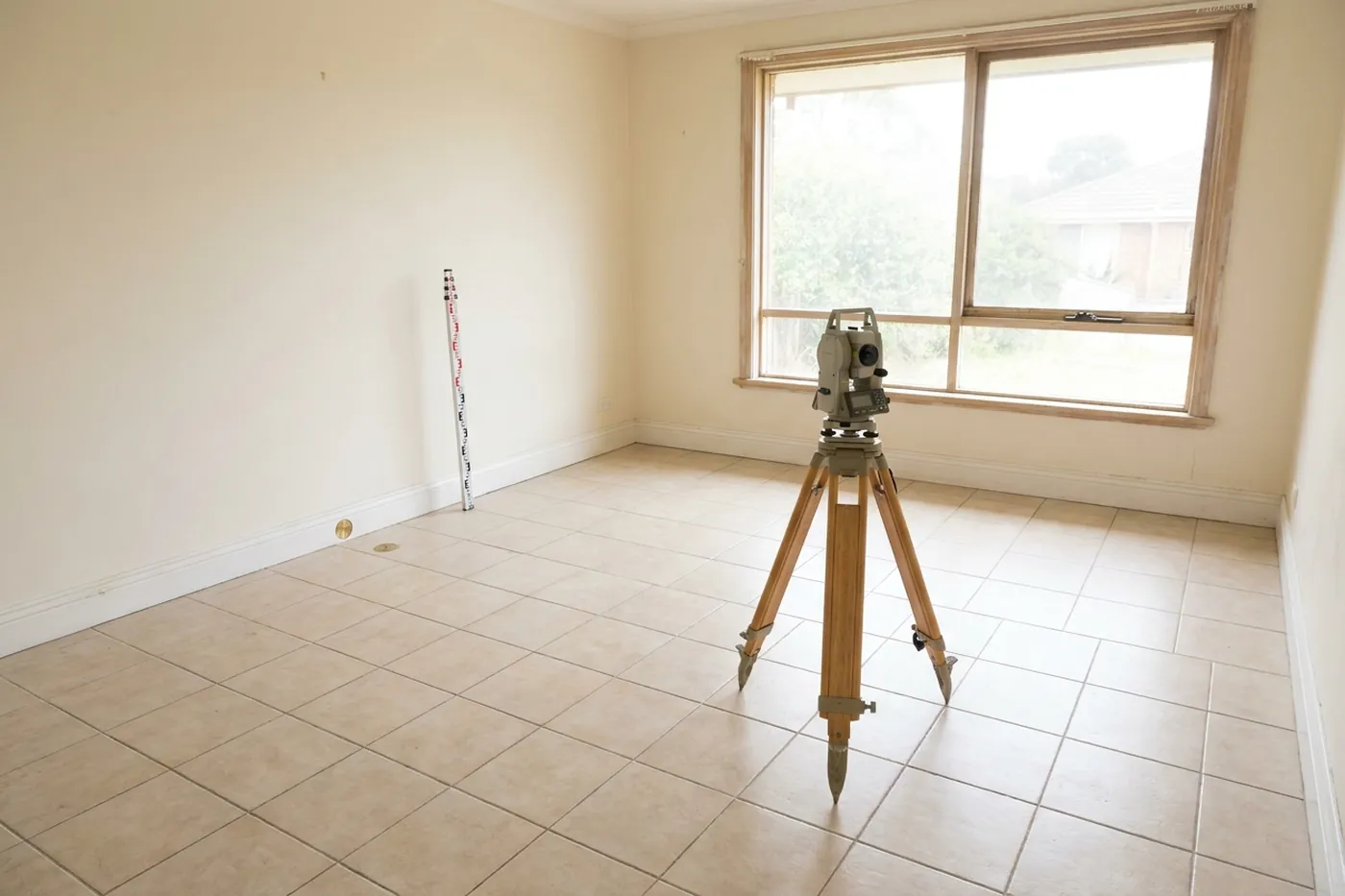
A house whose settlement finished years ago needs no support, and a great many houses here are in exactly that position — particularly older stock on the sand ridges. The survey shows the floor is out of level; the second survey shows it is not changing; the correct scope is nothing.
That outcome is why monitoring is worth asking for. A company paid for repairs has an obvious incentive to find them, and the only real check on that is a willingness to hand somebody a document that says their house is fine. A good specialist does that, and it costs them the job every time.
Before you pay anyone, check two other things
The builder, if the house is recent. An express warranty may cover it, and Florida’s Chapter 558 process has notice requirements and deadlines of its own. We are not lawyers and this is not legal advice, but paying a contractor for something a builder is obliged to put right is a bad way to spend money.
The geotechnical report, if the pad was built up. Florida Building Code 1804.6 contemplates one for fill deeper than 12 inches, and it describes what your ground is made of. The fill rules page explains where to look for it.
Straight answers about price
What is the average foundation repair cost in Panama City?
Reckon on $4,000-$15,000 for a complete job. Piers land between $1,200 and $3,000 each, releveling runs $3,000-$12,000, and probing to establish what your pad is made of is $300-$900. Ask whether the elevation survey is charged.
Why do two quotes on the same house differ by thousands?
Nearly always because they assumed different depths. Pier counts tend to agree; the distance each pier travels to reach competent sand does not, and it is the larger half of the arithmetic. Ask each bidder what depth they assumed and what they charge beyond it.
What makes a pier expensive here?
Distance. A pier that finds firm sand at 9 feet is at the bottom of the range. One that has to pass 60 inches of organic material and keep going is at the top. That depth is a property of your lot, not of the contractor, which is why nobody can quote it from the kerb.
Is there a job where the answer is zero?
Frequently. Where two surveys months apart show no change, the movement finished and there is nothing to stabilise. You may still choose to relevel for comfort, but that is a different purchase and it should be priced as one.
Is there a charge for the survey or the monitoring?
Ask the specialist whether the first elevation survey is charged, and what re-measurements from the same reference points will cost over the following months. A contractor is paid for repairs, and a good one would rather not sell one to somebody whose house stopped moving in 2012.
Does insurance cover any of this?
Settlement from consolidation of soils is typically excluded from homeowners policies, and a good specialist will not suggest otherwise to make a sale easier. A sudden event with an identifiable cause is a different conversation, and your adjuster decides it, not the contractor.
What about the builder, on a newer house?
Worth checking before you spend anything. An express warranty may apply, and Florida's Chapter 558 sets out a notice-and-opportunity-to-repair process with its own deadlines. Paying a contractor for something a builder is obliged to fix is a poor outcome.
Book a Panama City elevation survey
Tell us roughly when the house was built and whether the lot was raised or filled before it went up — even “I think they trucked dirt in” is worth knowing. On this ground the age of the house and the history of the pad narrow the answer faster than any description of a crack. A local specialist who serves Panama City will call you back.