
A foundation crack records that movement occurred, not that it is ongoing. On Panama City’s compressible ground those are different questions, and only relative floor elevations answer the second. Ask whether the first survey is charged.
What each pattern actually indicates, the one measurement worth more than all of them, and how to date a crack yourself for nothing.
What a crack is evidence of, and what foundation repair needs instead
That the structure moved, somewhere, at some point, by enough to exceed what the material could take. That is the whole of it. A crack carries no timestamp, and on a mechanism where a house may have settled between 2009 and 2013 and been still ever since, the missing timestamp is the entire question.
This is why nobody should quote from photographs. Not caution — it simply cannot be done honestly, and a contractor who does it is reading confidence into an image that contains none.
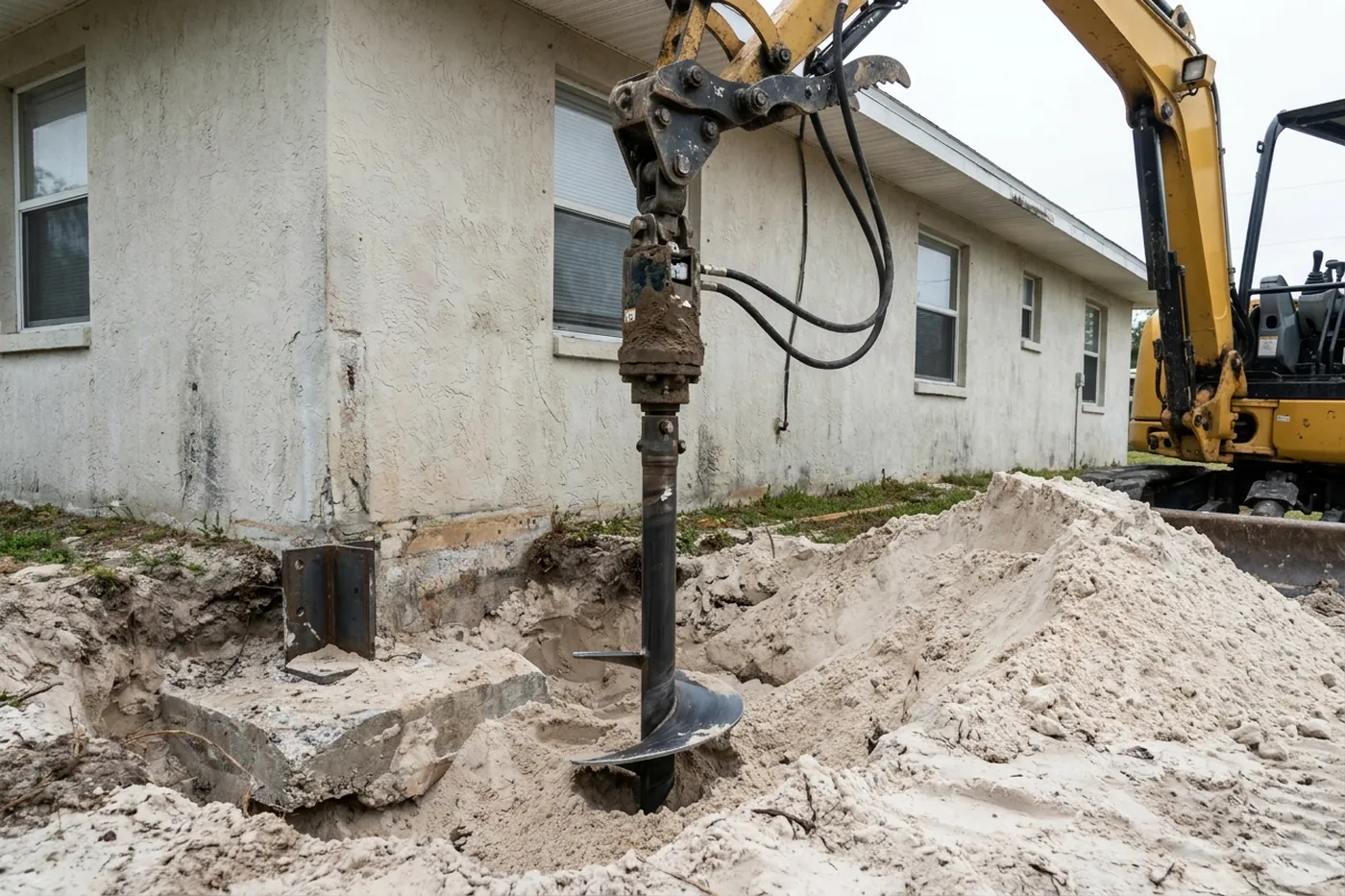
What the patterns do indicate
| Pattern | Reasonable reading | What it does not tell you |
|---|---|---|
| Stair-stepping through block mortar joints | Movement followed the weakest path, which in block is the joints | Whether it is current |
| Diagonal from a window or door corner | Stress concentrated at an opening, as it always does | How much the corner dropped |
| Vertical, uniform width, in drywall | Frequently framing shrinkage or a taped joint, not the foundation | Much of anything, honestly |
| Horizontal in a block wall, with bowing | Lateral pressure rather than settlement — a different problem | Whether settlement is also present |
| Two sides at different heights | Differential vertical movement. This one is worth attention | Whether it has stopped |
| Separation at a porch, garage or addition | Two structures on different foundations moving differently | Which of the two moved |
Notice how much of the right-hand column is the same phrase. Every pattern in the middle column has a blind spot in exactly the same place, and it is the place that decides whether you should spend money.
The measurement worth more than all of them
Relative floor elevation across the whole footprint. It produces a surface rather than a symptom, and a settlement surface has a shape: a consistent fall toward one area, steepest where the movement is greatest, rather than the random highs and lows of ordinary construction tolerance.
It is also comparable. Cracks cannot be compared to anything, but a set of elevations can be compared to the same elevations taken six months later, which is how the still-moving question gets settled. Full detail on what the survey involves is on the survey page.
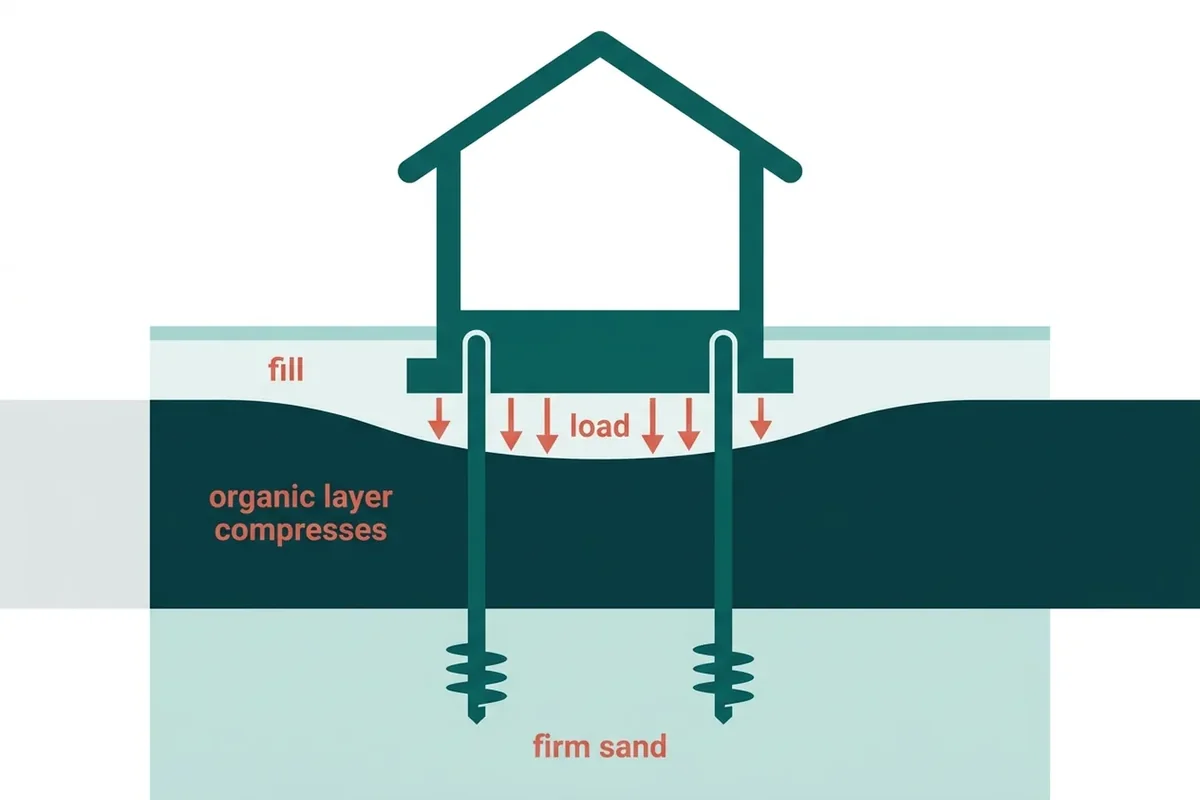
Date your cracks, for free, today
- Draw a pencil line across each end of the crack, perpendicular to it
- Write the date beside the line, on the wall, in pencil
- Photograph it with something for scale — a coin works
- Do nothing for three months, then look again
If the crack has grown past your marks, you have a rate of movement, which is more than most homeowners ever obtain. If it has not, that is equally useful and it cost you a pencil. Either way you arrive at the conversation with evidence rather than an impression.
Cracks, answered plainly
Can anyone tell what is wrong from a photo of my crack?
Nobody can tell what is wrong from a photo of your crack, and it is better to say so than pretend. A crack records that something moved at some point. It does not record how much, in which direction, or whether it is still happening. Those come from measuring the floor, not from looking at the wall.
Are stair-step cracks in block worse than straight ones?
They tell you the movement followed the mortar joints, which is what block does. They are not automatically more serious. Width, whether the two sides have moved out of plane, and whether the crack is changing matter far more than the shape it traced.
What crack width should worry me?
Width alone is a poor threshold. A quarter-inch crack that has not changed in fifteen years is a scar. A hairline that has doubled since spring is information. If you take one action from this page, mark the ends with a pencil and a date.
Do cracks in the slab mean the slab is failing?
Usually not. Concrete cracks as it cures and shrinks, and most slab cracking is that. It becomes structural when the two sides are at different heights, which is a thing you can feel with a bare foot and confirm with a survey.
Should I fill the cracks?
Only after you know whether the movement is finished. Filling a crack on a house that is still settling hides your only monitoring instrument. Where the survey shows things are stable, sealing and cosmetic repair are entirely reasonable.
What is the single most useful thing I can do before the specialist arrives?
Date the cracks. Pencil a line across each end, write the date beside it, and photograph it. If they have moved by the time the specialist comes out, that is a measurement nobody had to pay for.
Book a Panama City elevation survey
Tell us roughly when the house was built and whether the lot was raised or filled before it went up — even “I think they trucked dirt in” is worth knowing. On this ground the age of the house and the history of the pad narrow the answer faster than any description of a crack. A local specialist who serves Panama City will call you back.