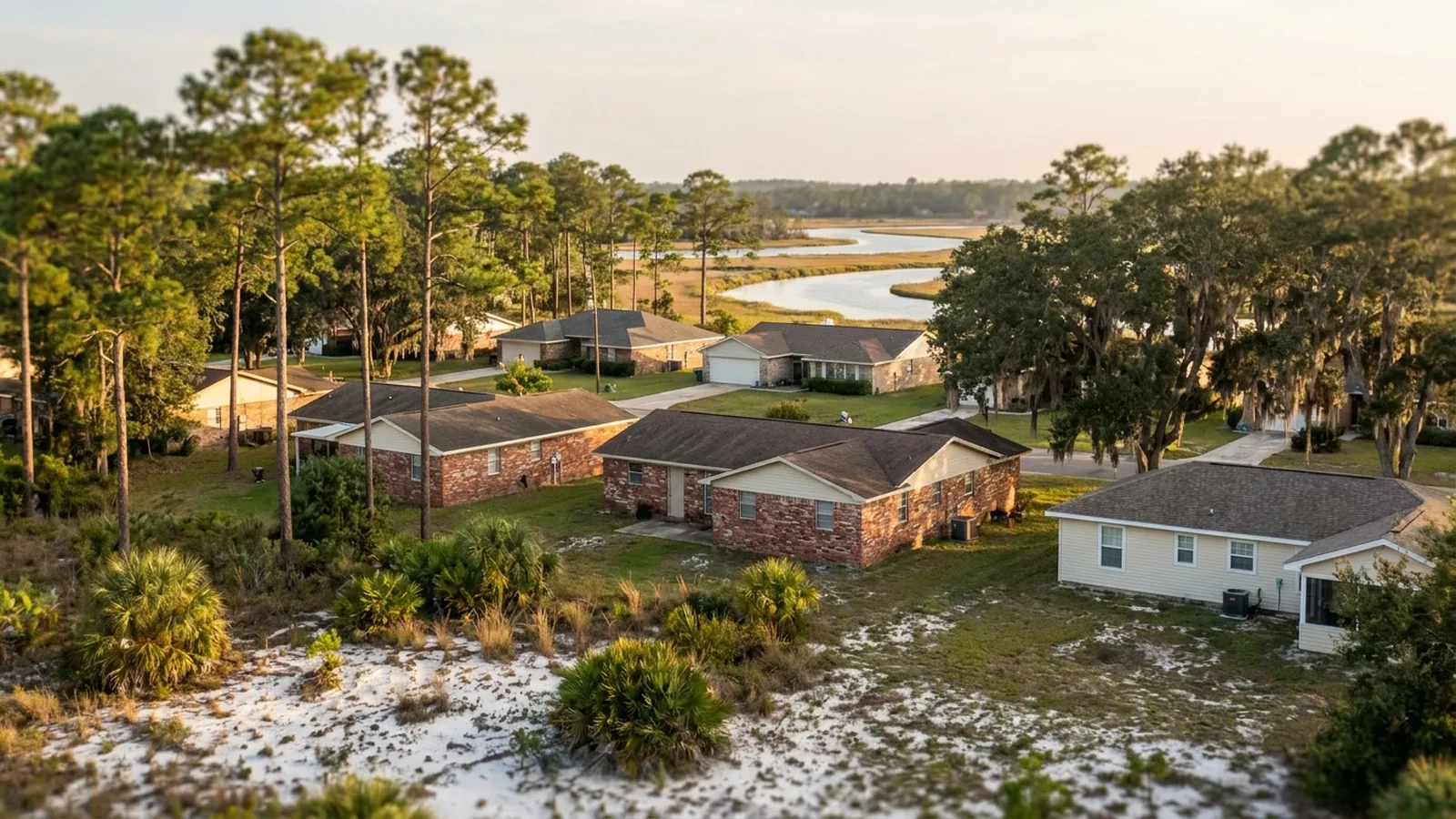
Establishing whether a Panama City house sits on native ground or placed fill runs $300–$900 by hand probing; ask whether the first elevation survey is charged. Florida Building Code 1804.6 requires fill deeper than 12 inches under a shallow foundation to follow an approved geotechnical report.
The two natural grounds in Bay County, the third one that was delivered by truck, and the paperwork that is supposed to exist.
The two natural grounds foundation repair here has to deal with
The USDA soil survey for Bay County is public, specific, and almost never consulted by the people it would help most. It maps the ridges and the flats as genuinely different materials.
| Series | Composition | Behaviour under a house |
|---|---|---|
| Foxworth sand | 93–96% sand, 0.25–1.25% organic matter, to 80 inches | Stable. Carries load and keeps carrying it |
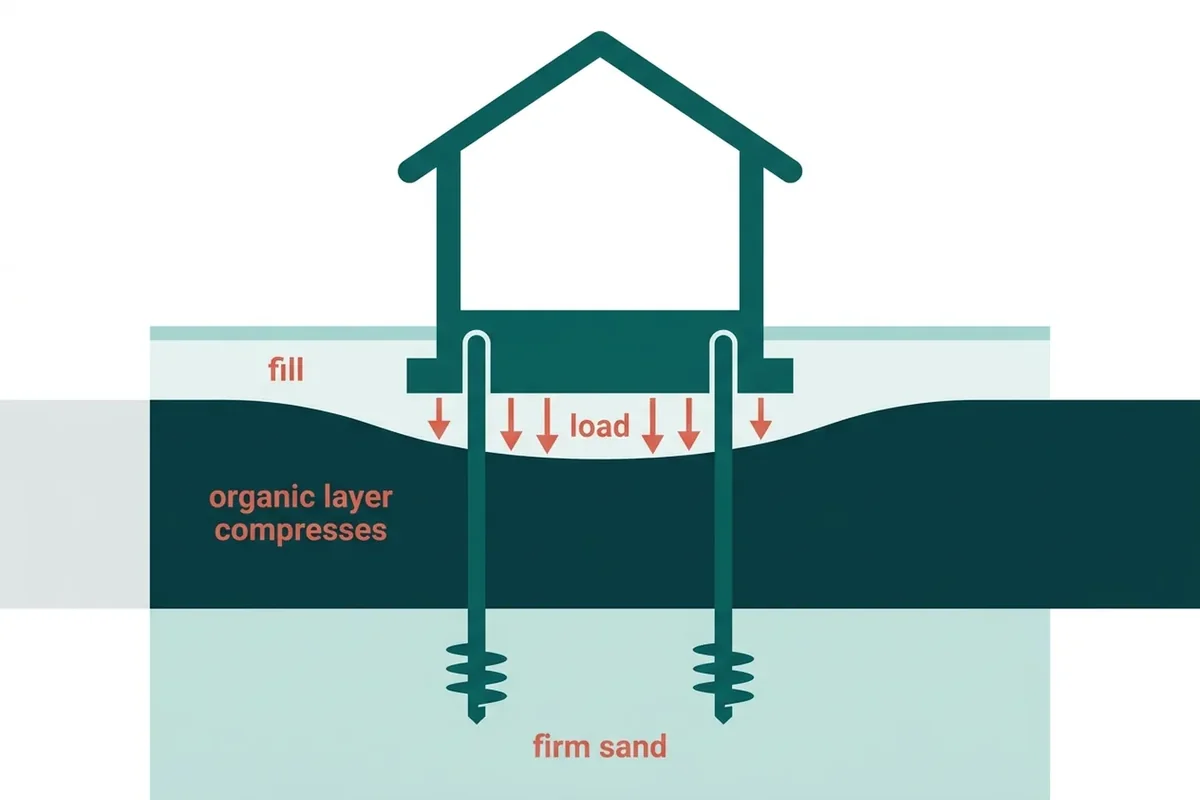
| Pamlico muck | About 50% organic material to roughly 32 inches, sand beneath | Compresses under load, slowly and permanently |
| Dorovan muck | 50–60% organic material to 60 inches, sand beneath | The same, with further to go before it finds bottom |
Both muck series are mapped as very poorly drained, which is the survey’s way of saying they formed in standing water. That is also why they are organic: material accumulated faster than it decomposed. It is excellent wetland and poor bearing.
The third ground, which arrived on a truck
A great deal of developed low ground here is not native soil at all. It is fill, placed to raise a lot out of the flat, and it is the most variable material on any site because its quality depends entirely on how carefully it was put down.
Fill placed in thin lifts and compacted to a tested density is genuinely good ground. Fill pushed into place in one go, with whatever was on hand, is a settlement problem waiting for a load. Both look identical from the driveway once grass has grown.
The rebuild after Hurricane Michael, which struck near Mexico Beach on 10 October 2018 with 160 mph sustained winds, put an unusually large number of new pads on this ground in a short period. That is context, not an accusation — but it is why a house built in 2021 can be moving while one from 1962 is not.
The report that is supposed to exist
This is the part most homeowners have never been told. Florida Building Code section 1804.6 requires that where shallow foundations bear on compacted fill, the fill complies with an approved geotechnical report. The exception is narrow: fill 12 inches or less in depth need not comply with a report, provided in-place dry density is at least 90 percent of maximum dry density determined per ASTM D1557.
Above that depth, section 1803.5.8 sets out what the investigation must specify: site preparation, the material to be used, test methods for maximum dry density and optimum moisture content, maximum lift thickness, field test methods, the minimum acceptable in-place density, and how many field tests are required and how often.
So if your house sits on a raised pad, a document describing all of that was contemplated by the code. Three places are worth asking: the building department that issued the permit, the builder, and your own closing file. Full detail on the fill and compaction page.
What a contractor can establish, and what they cannot
- A contractor can probe by hand to find the depth of placed fill and the top of natural ground in the first several feet, at several locations
- They can read the mapped soil series for your parcel and tell you what the survey expects to be there
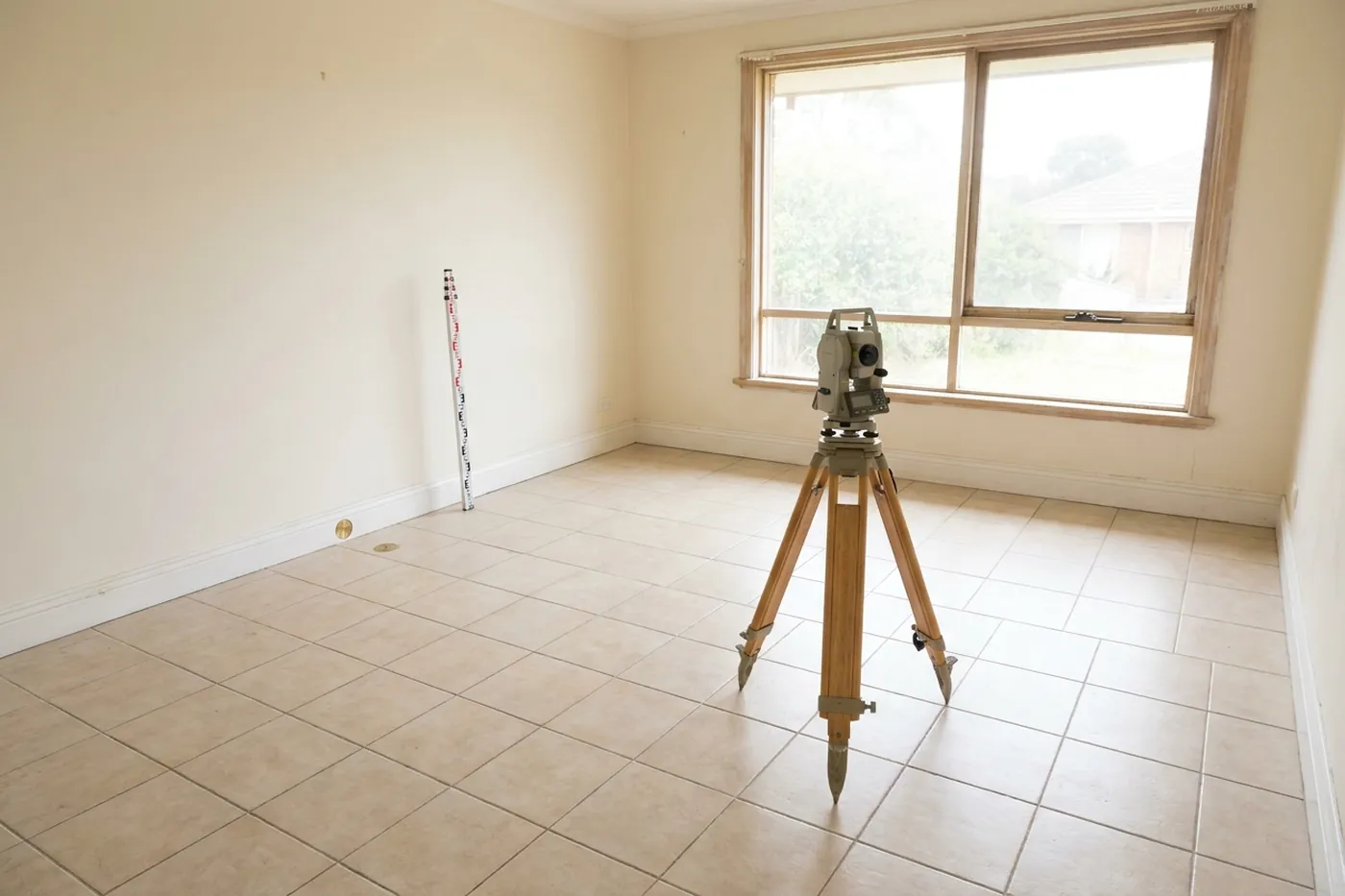
- They can measure your floor and tell you what the structure has actually done
- They cannot drill borings, run laboratory testing, or issue a geotechnical report — that is a different licence and a different firm
- They cannot tell you what is 40 feet down, and any contractor who offers to is describing a map rather than your lot
What you are built on, answered plainly
What does a soil and fill assessment cost?
Hand probing to establish whether you are on native ground or placed fill runs $300-$900 depending on how many locations. Ask whether the first elevation survey is charged. Actual soil borings are geotechnical work, and a good specialist refers those out rather than pretending otherwise.
What is Florida Building Code 1804.6?
It requires compacted fill under a shallow foundation to comply with an approved geotechnical report. The exception covers fill 12 inches or less in depth, which need only reach an in-place dry density of at least 90 percent of maximum dry density per ASTM D1557.
So a report should exist for my house?
If the pad it sits on is more than 12 inches of placed fill, yes - Section 1803.5.8 sets out what that investigation has to specify. Whether a copy survives is another matter, but the building department, your builder, or the closing file are the three places worth asking.
How do I know if my lot was filled?
Often the lot tells you. A pad noticeably higher than the road or the neighbours, a driveway that climbs, retaining at the property line, or a house whose crawl clearance differs front to back. Older aerial imagery of the parcel is also surprisingly informative.
Does being on fill mean there is a problem?
Not at all. Properly placed and compacted fill in lifts, tested as it went in, is excellent ground and behaves better than some native soils. The question is never whether there is fill - it is whether it was engineered fill or whatever was available.
Can a contractor tell me what is 40 feet down?
No contractor can tell you what is 40 feet down, and neither can anybody without a rig. Probing establishes what is in the top few feet, which is enough to answer most homeowners' questions. Deeper than that is a geotechnical investigation and requires a firm licensed to do it.
Book a Panama City elevation survey
Tell us roughly when the house was built and whether the lot was raised or filled before it went up — even “I think they trucked dirt in” is worth knowing. On this ground the age of the house and the history of the pad narrow the answer faster than any description of a crack. A local specialist who serves Panama City will call you back.