Florida Building Code 1804.6 requires compacted fill under a shallow foundation to comply with an approved geotechnical report. The exception covers fill 12 inches or less, which need only reach 90% of maximum dry density per ASTM D1557.
What the code actually requires, what the investigation must specify, and the three places a homeowner can go looking for the document.
The provision, as written
Section 1804.6 states that where shallow foundations will bear on compacted fill material, the compacted fill shall comply with the provisions of an approved geotechnical report, as set forth in Section 1803.
The exception is narrow and specific: compacted fill material 12 inches or less in depth need not comply with an approved report, provided the in-place dry density is not less than 90 percent of the maximum dry density at optimum moisture content, determined in accordance with ASTM D1557.
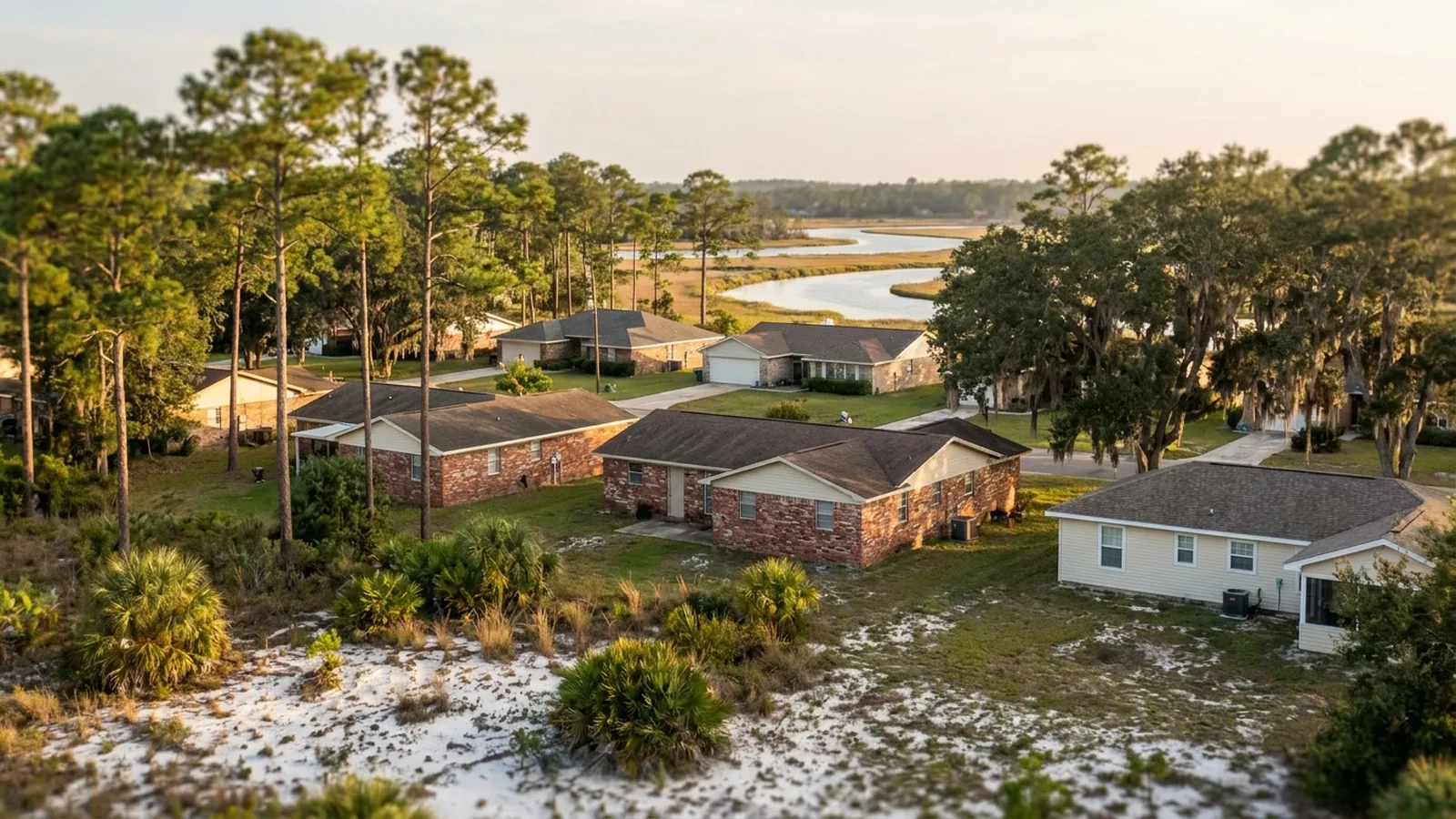
Twelve inches is not much. A pad raised to get a house out of the flat, which is ordinary practice on the low ground around the bay, is routinely well past it.
What the investigation has to cover
Section 1803.5.8 sets out the contents where fill exceeds that depth. It is a specific list rather than a general instruction:
- Specifications for site preparation
- Specifications for the material to be used
- Test methods for determining maximum dry density and optimum moisture content
- The maximum allowable thickness of each lift
- Field test methods for determining in-place dry density
- The minimum acceptable in-place dry density, as a percentage of maximum
- The number and frequency of field tests required
Read that list against the mental image of a truck dumping dirt and a machine pushing it flat. The gap between those two things is the whole reason the section exists, and it is why properly placed engineered fill behaves so differently from the alternative.
Three places to look for the document
| Where | How to ask |
|---|---|
| The building department that permitted the house | A public records request for the permit file, by address and permit number |
| The builder or developer | Directly, in writing. Newer builds have the best chance of a surviving copy |
| Your closing file | Worth a look before the other two, because it costs nothing and it is already yours |
Records vary and plenty of files are incomplete, particularly older ones. A missing report is not proof of anything and we are careful not to present it that way. What it changes is your position: with the document, the ground under your house is described; without it, it is a question.
Why this drives foundation repair here more than anywhere
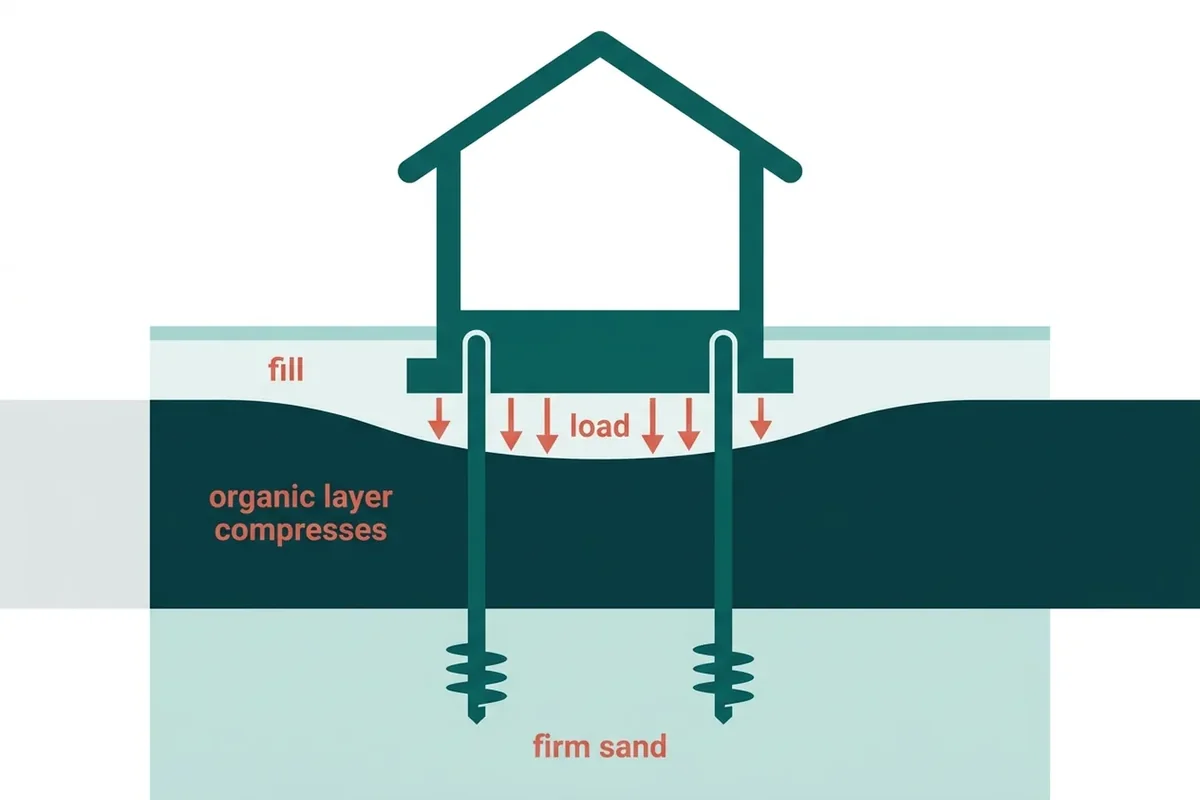
Because the alternative to fill, on much of the developed low ground in Bay County, is building directly on organic soil. The USDA maps Pamlico muck at roughly 50 percent organic material to about 32 inches, and Dorovan muck at 50–60 percent to 60 inches. Nobody founds a house on that — they raise the lot instead.
Which means fill here is not an occasional site condition. It is the normal way a large share of local housing meets the ground, and how well it was done is the single biggest predictor of what that house does over the following decade. See what can be established about your pad, or why newer houses move more.
The fill rules, answered plainly
What does Florida Building Code 1804.6 say?
That where shallow foundations bear on compacted fill, the fill must comply with an approved geotechnical report as set out in Section 1803. The exception is fill 12 inches or less in depth, which need only reach an in-place dry density of at least 90 percent of maximum dry density per ASTM D1557.
What has to be in the investigation?
Section 1803.5.8 lists it: specifications for site preparation and for the material used, test methods for maximum dry density and optimum moisture content, the maximum thickness of each lift, field test methods for in-place dry density, the minimum acceptable density as a percentage, and how many field tests are required and how often.
Where would a copy of that report be?
Three places are worth trying: the building department that issued the permit, the builder or developer, and your own closing file. Records vary and older ones may not have survived, but the request itself is ordinary and you are entitled to make it.
What if no report exists?
It does not automatically mean anything was done wrong, and it is not something we can adjudicate. What it means practically is that there is no record of what the pad is made of or how it was compacted, so the condition of your ground is an open question rather than a documented one.
Does the code apply to my 1970s house?
The provisions in force were those of the day, and older construction predates much of the current framework. This matters most for houses built recently on raised pads, which in Bay County is a large and growing share of the housing stock.
Can a contractor tell me whether my fill was compacted properly?
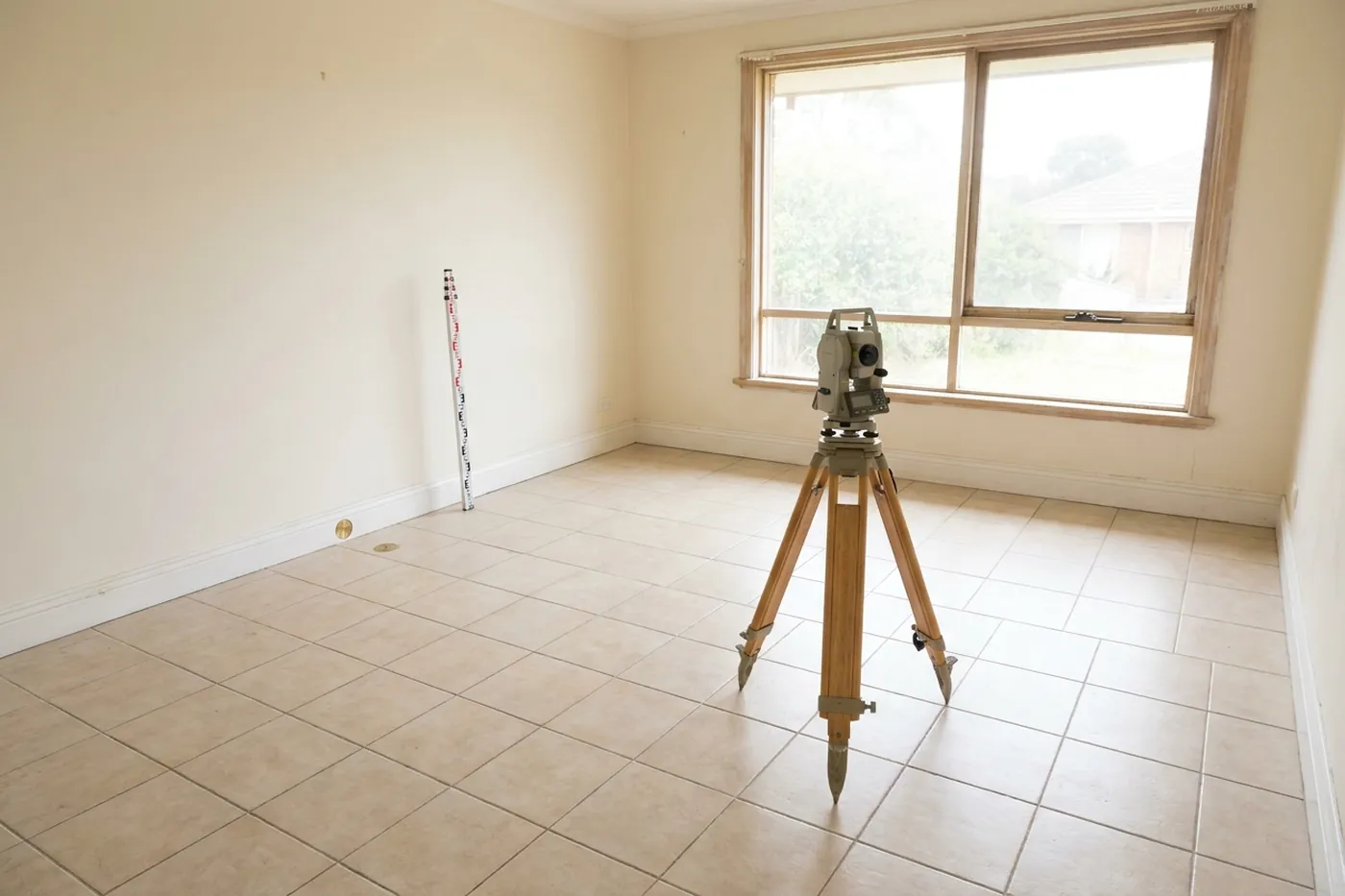
A contractor can establish how deep it is by probing and what the structure has done by measuring. Whether the material met a density specification is a laboratory and field-testing question that belongs to a geotechnical firm, and a good specialist will say so rather than guess.
Book a Panama City elevation survey
Tell us roughly when the house was built and whether the lot was raised or filled before it went up — even “I think they trucked dirt in” is worth knowing. On this ground the age of the house and the history of the pad narrow the answer faster than any description of a crack. A local specialist who serves Panama City will call you back.