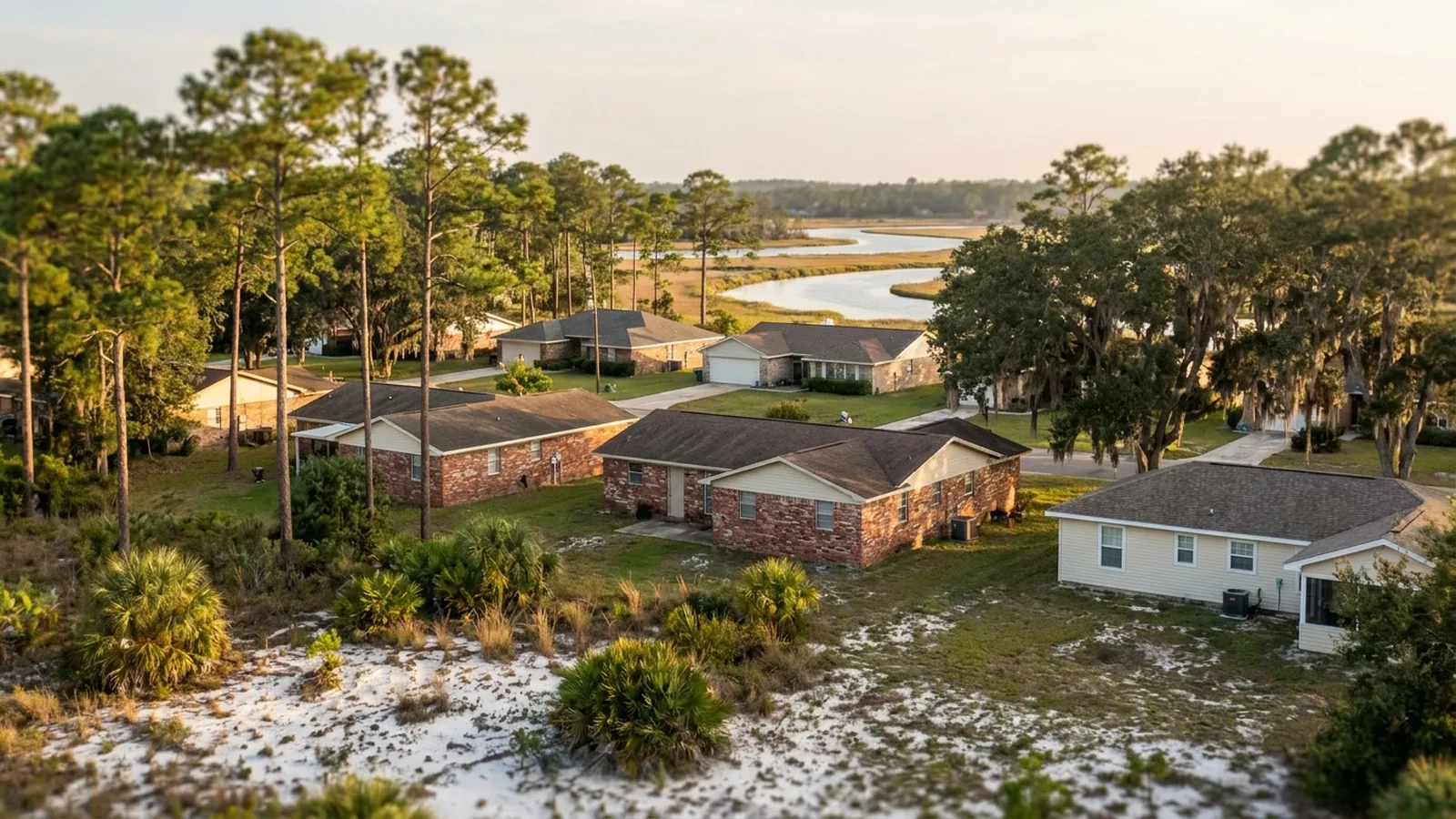
A newly built Panama City house can settle more than a 1960s one next door. Consolidation follows load and time, not age — and much of the region’s new housing sits on raised pads over compressible ground. Ask whether the first elevation survey is charged.
Why age runs backwards here, what the warranty position is, and why a baseline survey early is worth more than a diagnosis later.
Foundation repair here skews toward the newer houses
Everywhere else, an old house is the one with foundation problems and a new one is presumed sound. On compressible ground that intuition inverts, and it inverts for a reason that is easy to state.
Consolidation begins the moment a load is applied and runs until the ground beneath it reaches equilibrium. It is fastest at the start and slows continuously. A house built in 1962 on a sand ridge completed that process before most of us were born. A house built in 2021 on a pad over organic material is in the steep early part of the curve, which is precisely where movement is most noticeable.
So “it is a new house, it cannot be the foundation” is the classic wrong assumption in Bay County.
Why so many new pads sit on made ground here
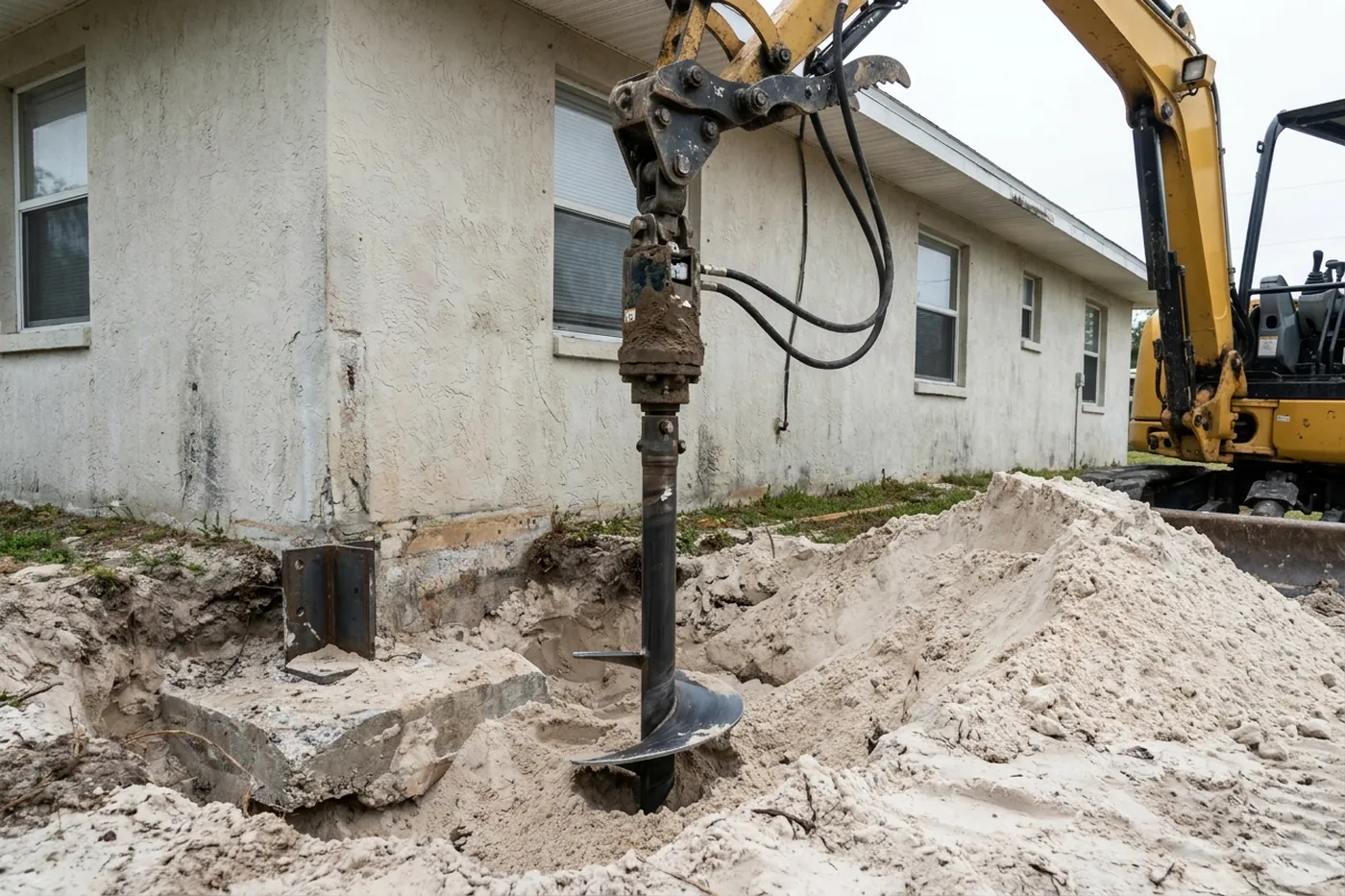
The low ground around the bay and the bayous is where the developable land ran out first, so raising a lot with fill is ordinary practice rather than a shortcut. The mapped soils explain why: the Pamlico and Dorovan series are very poorly drained organic mucks, and building on them means building above them.
The rebuild that followed Hurricane Michael, which came ashore near Mexico Beach on 10 October 2018 with 160 mph sustained winds, compressed an enormous amount of that construction into a few years. More new pads went down in Bay County in that period than in the decade before it. That is context rather than blame — but it does mean an unusual share of local housing is young, on made ground, and early in its settlement curve at the same time.
Check the warranty before you check the wallet
| Route | Worth knowing |
|---|---|
| Express builder warranty | Whatever your contract says, with its own notice period. Read it first |
| Florida construction defect process | Chapter 558 sets out a notice-and-opportunity-to-repair procedure before a claim. It has deadlines |
| The geotechnical report | If the pad is more than 12 inches of fill, FBC 1804.6 contemplates one. See the fill rules |
| An independent survey | Useful to any of the above because it is a measurement rather than an argument |
We are not lawyers, and none of the above is legal advice. But paying a contractor to fix something that somebody else is contractually obliged to fix is a bad outcome, and it happens because nobody checked in the right order.
Get a baseline while nothing is wrong
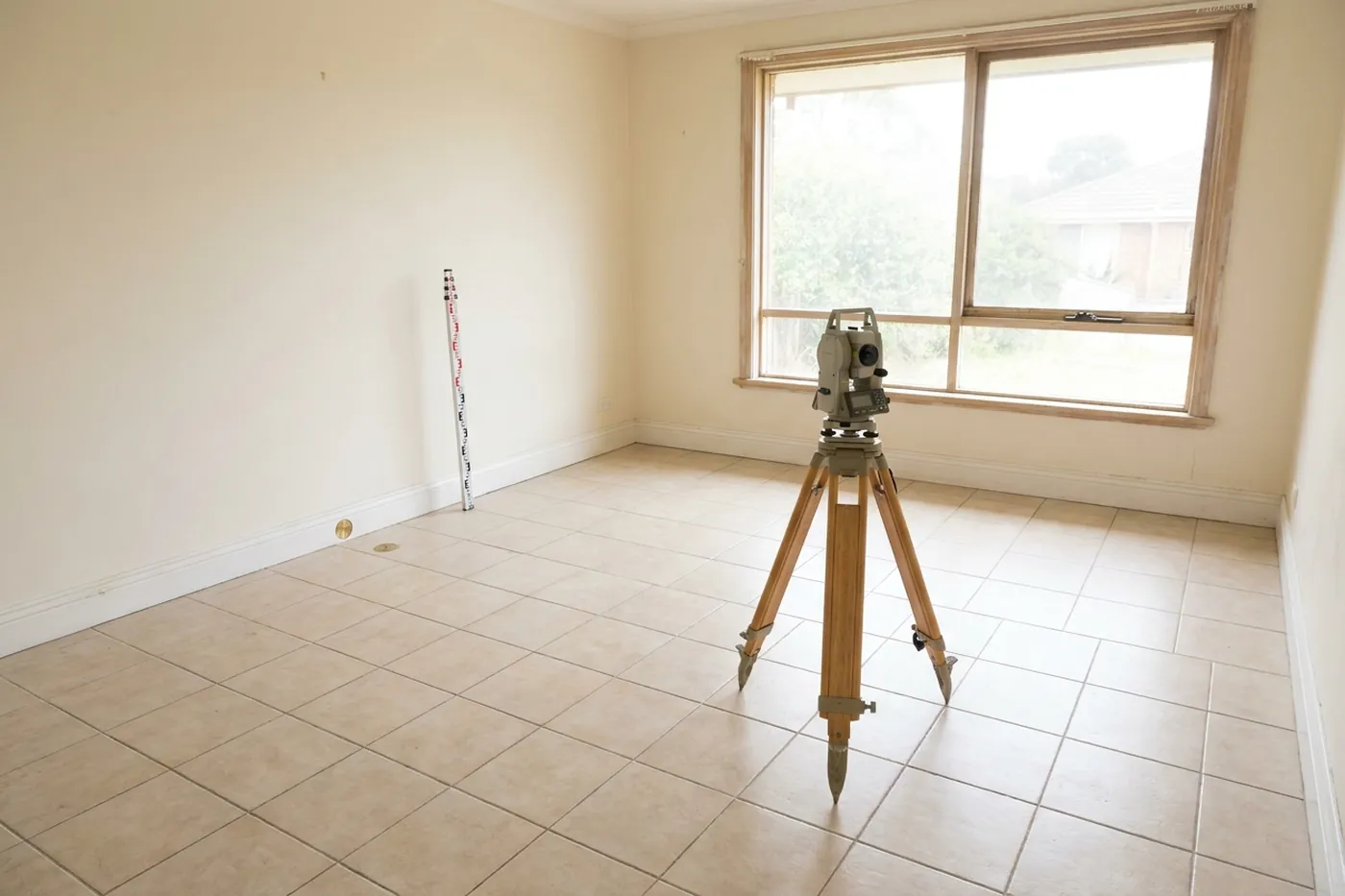
The most valuable survey on a new house is the one taken when there is no problem. It costs nothing, it takes an hour, and it converts every future argument about whether the floor has always been like that into a comparison of two numbers.
Without it, a homeowner in year six has cracks, a slope, and no way to show whether either is new. With it, a second survey settles the question in an afternoon.
New construction settlement, answered plainly
Can a house built in 2021 really have settlement?
A house built in 2021 really can have settlement, and on this ground it is more likely than on a 1962 house. Consolidation runs on load and time. An older house on ridge sand finished long ago. A newer one on a pad over compressible ground is early in the process, which is exactly when movement is fastest.
Isn't new construction covered by a warranty?
Often, and that is the first thing to check rather than the last. Florida's statutory construction defect process and whatever express warranty your builder issued both have their own notice requirements and time limits. Read them before spending money on a private repair.
Does this mean my builder did something wrong?
Not necessarily. Fill can be placed correctly and a house can still settle within tolerance as the ground takes up load. What the code contemplates is that the fill was engineered and tested, and whether that happened is a question with a paper answer rather than an opinion.
How much settlement is normal for a new house?
Some is expected and it is usually uniform. What matters is differential movement - one part of the footprint going down relative to another - because that is what puts stress into a structure. An elevation survey across the whole floor is what separates the two.
How soon should I have it measured?
Early, because the value is in having a baseline. A survey taken in year two is worth a great deal in year five, when somebody asks whether the slope has been there all along. Ask whether the first survey is charged; otherwise the only cost is the appointment.
Will it stop?
Almost always, eventually. Consolidation runs until the ground under the load reaches equilibrium, and it slows the whole way. The useful question is where on that curve your house currently sits, and that is what two surveys months apart establish.
Book a Panama City elevation survey
Tell us roughly when the house was built and whether the lot was raised or filled before it went up — even “I think they trucked dirt in” is worth knowing. On this ground the age of the house and the history of the pad narrow the answer faster than any description of a crack. A local specialist who serves Panama City will call you back.